-

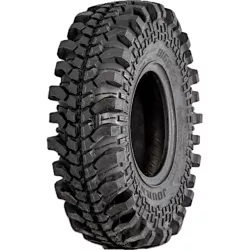
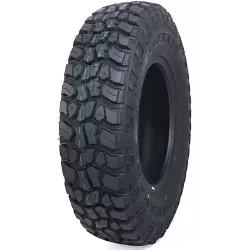
Off-road
-

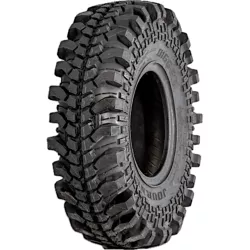
SUV
-

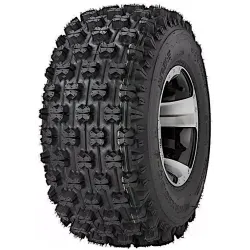
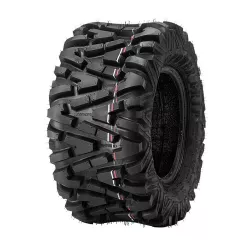
ATV / Quad
-

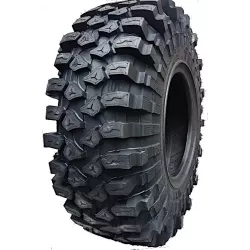
Industrial
-

Van
-

Passenger


Tyre labelling.
Below, I will present what information is included on the tyre label, what parameters it contains, and what they mean in practice.
Under Regulation (EU) No 2020/740 of the European Parliament and of the Council, all tyres for passenger cars, vans, and trucks manufactured after 1 May 2021 must be marked with a new label.
The new label indicates three important parameters: fuel efficiency, wet grip, and noise, as well as information regarding specific use in severe snow and ice conditions.
The label features a QR code that provides direct access to the European Product Registry for Energy Labelling.
How to read the label?

- QR code.
- Supplier's name or trademark.
- Tyre type identifier.
- Tyre size designation, load capacity index, and speed category symbol.
- Tyre class: i.e., C1, C2, or C3.
- Fuel efficiency pictogram, scale, and efficiency class.
Depends on rolling resistance, which affects fuel consumption and exhaust emissions.
A - most efficient tyre, with the lowest rolling resistance, saves fuel, lowest exhaust emissions.
E - least efficient tyre, with the highest rolling resistance, consumes the most fuel, highest exhaust emissions. - Wet grip pictogram, scale, and wet grip class.
Indicates the ability to maintain grip on wet surfaces.
A - safest tyre, shortest braking distance.
E - worst tyre grip, longest braking distance. - External rolling noise pictogram, value (expressed in dB and rounded to the nearest integer), and class.
Determines the noise generated by the tyres of a passing vehicle. The noise level is measured in decibels (dB) and presented on a three-grade scale.
A - quietest tyre.
C - loudest tyre.
Additionally, the noise level value is also provided in dB. - Snow grip pictogram.
- Ice grip pictogram.
- Serial number of this Regulation: "2020/740".
Please note:
Actual fuel savings and road safety depend heavily on the behaviour of drivers, and in particular on the following factors:
- eco-driving, which can significantly reduce fuel consumption,
- tyre pressure, which should be regularly checked to ensure better optimal wet grip and optimal fuel efficiency,
- strict compliance with safe stopping distances between vehicles.
(2) 0